
Are You Still Designing – or Already Prompting?
AI is set to fundamentally transform architectural design: from iterative trial and error to accelerated, data-driven collaboration with learning systems.
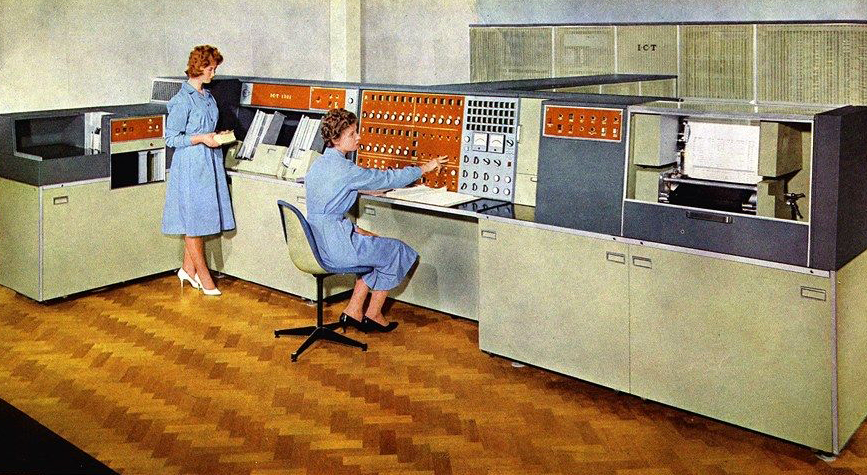
We are witnessing a paradigm shift in the way we design and plan architecture.
Until now, we have thought, then constructed – then rethought, reconstructed, and so on: following mental patterns as old as humanity itself. Put simply, the process can be described as “trial and error” – iteratively moving forward until a built result satisfies all parties involved.
With the arrival of artificial intelligence in our cultural and professional spheres, it’s becoming clear that much of this work may no longer need to be done by us. AI can already generate text, images, and videos when we tell it what we want – using tools like ChatGPT, Midjourney, or Runway.
When it comes to generating 3D geometry, AI is still facing limitations – but it’s already possible (via Meshy AI or Luma AI), resulting in polygon models comparable to game assets.
AI cannot yet produce meaningful, structured building geometry. But does anyone seriously believe it will take much longer? The speed at which AI gains new capabilities is clearly exponential. We’ve just learned that AI can now act as an agent – using software autonomously. At the moment, its skillset seems limited (like reading Gmail), but logically there is nothing preventing AI from operating a BIM authoring tool like Archicad just as a human would – if a human tells it what to do.
The potential for architectural workflows is enormous. Imagine the speed at which ordinary layout and construction variants could be generated within a given building volume – including detailed analyses of space efficiency, lifecycle assessments, and so on.
So the real question is not whether AI will soon be designing and planning actively within digital tools, but how we will communicate with it. New interfaces – or let’s say prompt formats – will have to evolve that go beyond text, images, or voice. And these may eventually emancipate into app components of their own.
Beyond the technical potential and opportunities, the integration of AI into architectural design and planning will inevitably raise the question of how self-determined our creative processes remain when constantly mediated by a machine. The introduction of CAD in the 1980s already sparked a wide-ranging cultural debate that is far from resolved (just look at design practice in many German architecture faculties). Building Information Modeling further fueled the discussion – driven by fears that BIM would restrict the architect’s autonomy even more severely than CAD ever did.
So we are not merely entering another era of technological change – we are standing at the threshold of a fundamentally new division of labor between human and machine in architectural thought. The questions that arise are not just technical. They concern our self-understanding as designers, the role of intuition and judgment – and ultimately the very notion of authorship in the digital age.
In the coming articles, I will take a closer look at which tools are already suitable for AI-supported design work, how the communication process between designers and AI is evolving – and what it means when we no longer design alone, but in dialogue with a system that learns faster than we do.